Saturday, 3 January 2015

Trish Morrissy (Research)

Trish Morriessy

Biography:
Trish Morriessy was born in Dublin in 1967. Majority of Morrissy work is based all around beaches as she traveled around to different beaches in the UK and around Melbourne. There, she approached families and groups of friends who had made temporary encampments (accommodation) and asked if she 'could be part of their family temporarily'. Morrissey took over the role or position of a Woman within that group, it was usually the mother figure. Whilst she took over the women's role, she then asked to borrow her clothes. Whilst Morrissey was a part of their family 'temporarily' the original Women/Mother figure took over the artist's role and photographed her own family using a 4x5 camera.

Every piece within the series of photographs is titled by the name of the women who the artist replaced within the group. 

 She works with photography, film and video. She has exhibited around the world, including solo shows at: 


  • ''Impressions Gallery, Bradford, UK'' 
  • ''Pumphouse Gallery, London, UK''
  • ''Yossi Milo Gallery, New York, USA''
  • ''Gallery of Photography, Dublin, Ireland'' 
  • ''Centre for Contemporary Photography, Melbourne, Australia'' 


Her work is in the permanent collection of the following: 


  • The ''Victoria and Albert Museum, London'' 
  • The ''Museum of Fine Art, Houston, USA'' 
  • The ''National Media Museum, Bradford'' 
  • The ''Wilson Centre for Photography, London'' 

Evaluation: (3 photos)


#1.
Do I like this this image?
I do like this image and the reason on why I do is because I find it quite interesting as she is sat there playing the family role whilst the actual mother is taking the photo. 

How does it make me feel?
This image makes me feel like Trish is playing the mother 'role' as well as the dad the 'role'.  I think this purely because of how Trish is sat higher than the dad like she is saying she is the one who's in charge of the situation. Also, knowing the information behind Trish Morrissey and how she does things, it's almost as if she steps inside and embodies the formal and cultural archetypes. 

Does the image tell a story?
I think the image does tell a story and the story that I believe that is told is that she wants you to understand another meaning rather than just 'this is our family', I think she's wants you to reach out and understand the way on how she works. For example, instead of just looking at it like 'another' family photo. She wants you to look at it like 'what does this family do?', 'what do they get up to when the camera isn't rolling?' It is as if she is making a documentary on her 'temporarily' family.

Was the photographer trying to get a message or particular feeling across to the viewer?
I think the photographer was trying to get a message across to the viewers and I think that this message was that she enjoyed taking over the female 'role' in family.

Leading lines?
This image doesn't use lines to direct the eyes of the viewer, neither does it have any strong diagonals.

How is the space used? 
The space is used truly well with the 'positive' space surrounding Morrissey 'temporarily' family.


#2.
Do I like this this image?
I do like this image and the reason on why I do is because I find it quite fascinating. This is because of how someone else is taking a photograph of Morrissey herself.

How does it make me feel? 
This image makes me feel as if she's conceited, meaning she's vain. I think this purely because of how it's not only just her in this image but also on the others when she's supposed to be the ''photographer.


Does the image tell a story?
I think the image does tell a story and the reason on why I do is because of how the image is took. For example, the person who has took this shot has got their fingers in the way. Why would Morrissey publish a image that isn't took correctly? This photo demonstrates well that the person who photographed this shot had no idea on how to work a camera proper.  

Was the photographer trying to get a message or particular feeling across to the viewer?
I think the photographer was trying to get a specific message across to the viewers as I wouldn't think that she would of added this photo to the series called 'Front''.  

Leading lines?
This image doesn't use lines to direct the eyes of the viewer, neither does it have any strong diagonals.

How is the space used? 
I think the space is used well as I think the surrounding space around her compliments her and the photo because without it, it'll make the image look less interesting because it'll just be a close up of her and not including the beach which is what this series is all about.  


#3.
Do I like this this image?
I do like this image and the reason on why I do is because you wouldn't of knew that she didn't belong in that group of mates when really, she's taken the place of an girl who actually belonged with them. 

How does it make me feel? 
This image makes me feel as if Morrissey had a huge amount of enthusiastic in her personality. This is because she's asked a group of friends if she can 'temporarily' join them even though she's not in the same age category and by this, it seems like she's so passionate and eager to make things work out.

Does the image tell a story?
I think the image does tell a story and the story that I think is told is that I personally think Morrissey enjoyed feeling like she 'fit' into somewhere even though it was only for a short amount of time. 

Leading lines?
This image doesn't use lines to direct the eyes of the viewer, neither does it have any strong diagonals.

How is the space used? 
The space is used well as the composition is truly correct with the right amount of space.  

Alec Soth (Research)

ALEC SOTH


Biography: 
Alec Soth was born in 1969, in Minneapolis, Minnesota. He studied in Bronxville, New York at ''Sarah Lawrence College''. Soth received international acclaim when his photographs were featured in numerous solo and group exhibitions. In 2009,  a large survey exhibition of Soth's work has exhibited at the ''Jeu de Paume'' in Paris, France and ''Fotomuseum Winterthur'' in Switzerland.  In 2010, the ''Walker Art Center'' mounted a all-inclusive exhibition with an accompanying catalogue titled ''From Here To There'', Alec Soth's America. His first monograph, ''sleeping by the mississippi'' that was published by 'Steldl' in 2004 to critical acclaim. Since then Soth has published the following:

  •  ''Niagara'' (2006)
  •  ''Fashion Magazine'' (2007)
  •  ''Dog Days, Bogota'' (2007) 
  • ''The Last Days of W'' (2008) 
  • ''Broke Manual'' (2010) 
In 2008, Soth also started his own publishing company, ''Little Brown Mushroom''. 

His work is in the permanent collections of numerous museums. These are: 
  • The ''Brookyln Museum of Art'' 
  • The ''Los Angeles County Museum of Art'' 
  • The ''Museum of Contemporary Art, Chicago'' 
  • The ''Museum of Fine Arts, Houston'' 
  • The ''San Francisco Museum of Modern Art'' 
  • The ''Walker Art Center, Minneapolls'' 
  • The ''Whitney Museum of American Art, New York'' 


Evaluation: (3 photos)


#1.
Do I like this this image?
I do like this image and the reason on why I do is because of how it gives that 'dreamy' effect with the focus just all on him but yet also gives you that feeling of neglect and disappointment with just how his facial expression shows through. 

How does it make me feel? 
This image makes me feel as if that the mood of this picture of what I described above of why I like this image is true like it has a certain meaning of why he did it the way he did. 

Does the image tell a story?
I think this does tell a story and I believe the story that is told is about 'civilization' and 'society' and what I mean by this is at the fact of that it's a guy in the middle of the woods by himself of where he feels more comfortable and his best. 

Was the photographer trying to get a message or particular feeling across to the viewer?
I think the photographer was trying to get a particular feeling across to the viewers and what I mean by this is that I think personally Soth was inspired about these people who hid themselves away because they seemed as if they where a 'downcast' compared to the rest of society. 

Leading lines?
This image doesn't use lines to direct the eyes of the viewer, neither does it have any strong diagonals.
 

How is the space used? 
The space around the man is truly necessary so it is used well. I believe this because without that space around him, you wouldn't be able to know where the man habitats which is the whole point of this photo and the rest of the series of ''Broken Manual''.   


#2.
Do I like this this image?
I do like this image and the reason on why I do is because it basically tells you story just by the first look and I believe it is showing a Mother and her child of her background and where she lives and from the look of things it doesn't look like a stable, nice, clean environment to raise a child. 

How does it make me feel? 
This image makes me feel sorrow for the Mother. This because of how it looks like she has nothing, like all her life just involves around emptiness and destruction. 

Does the image tell a story?
I think the image does tell a story and I believe the story that is being told is about social classes. What I mean by this is that you get three types of people, lower class, middle class and upper class and the women in the picture is lower class and this is just by my personal opinion and judgement. I've judged it on lower class purely because this photo is in the series off 'Broken Manual'' and it's about people who basically hid their whole lives because they feel they're not 'good' enough.  

Was the photographer trying to get a message or particular feeling across to the viewer?
I think the photographer was trying to get a particular feeling across to the viewers and what I believe that feeling is that no matter what class you in, the photographer (soth) found them inspiring into what different world they live.

Leading lines?
This image doesn't use lines to direct the eyes of the viewer, neither does it have any strong diagonals.


How is the space used? 
I think the space is used brilliantly and the reason on why I do is because of how the surroundings basically tells you story of which is behind this image.  


#3.
Do I like this this image?
I don't like this image and the reason on why I don't is purely because I don't find it appealing as the other images which show above. 

How does it make me feel? 
This image makes me feel sadness towards him as by the look of things he doesn't have the best of lives and just habitats at home and sticks to himself. 

Does the image tell a story?
I think the image does tell a story and what I believe is told is that the man in the image has a 'shabby' life and what I mean by this is that he lives in poor conditions and has lack of care for himself.  

Leading lines?
This image doesn't use lines to direct the eyes of the viewer, neither does it have any strong diagonals.

How is the space used? 
The space is used well with the mans habitat place in picture and also with no extra 'negative' space that could also be involved. 

Friday, 2 January 2015

Diane Arbus (Research)

Diane Arbus

Biography:
Diane Arbus was born in 1923, on March 14, in New York City. She learnt photography from her husband, actor ''Allan Arbus''. Together, they found success with fashion work, they both became a quite a successful team with photographs appearing in ''Vogue'' magazine. In late 1950s, she began to focus on her own photography and branched out on her to further her art, Diane studied with a photographer ''Llsette Model''. Her out of the ordinary, unusual images of the people she saw while living in New York created a unique and interesting 'portrayal' of the city. Several of her images found their way into the July 1960 issue of ''Esquire'' magazine. 

During the mid-1960s, Diane had become a great photographer, taking part in shows at the ''Museum of Modern Art'' in New York, among other places too. She was known for going t great 'lengths' to get the shots she wanted. She became friends with many photographers, which included ''Richard Avedon' and ''Walker Evans''. 

While continuing her work in the 1960s, Diane had to face some personal challenges.  By this I mean her marriage to ''Allen Arbus'' ended in 1969 and then later struggled with depression which led to Diane committing suicide in her apartment on July 26, 1977. 


Evaluation: (3 photos)

#1.
Do I like this this image?
I do like this image as I think it catches your eyes with the fact it's two identical twins stood right next to each other, wearing old-fashioned clothing and standing in a straightforward manner.  

How does it make me feel? 
This image makes me feel quite sad as it comes across disturbing as both twins have completely different facial expressions. One smiling and other looking quite sad. 


Does the image tell a story?
I think this image does tell a story and the story that I believe is told is that just because you're identical doesn't practically mean that you're the exact same. This images shows a lot as it shows one twin smiling and the other unhappy. It comes across like the twin on the left feels a bit isolated and tells a completely different story than to the one on the right. 


Was the photographer trying to get a message or particular feeling across to the viewer?
I think the photographer was trying to get a message across the viewers as this image shows we all have our own separate identity as we're not all the same and it's nothing to be afraid of. 

The composition of this image is using the 'triangles' technique and this technique compliments the picture well making the photo feel more stable. Triangles are a good way of combining different compositional techniques such as lines and paths and using them to create a more interesting part of a photograph.  

Leading lines?
This image doesn't use lines to direct the eyes of the viewer, neither does it have any strong diagonals. 


How is the light used?
The light is used with a combination of natural light and artificial light as this image was taken outside but it seems like the contract has been signified as there is a huge amount of it. It seems to come across that Arbus wanted to brighten up the light further up the image where you could make out both of twins facial expressions as that is what specifically tells the story.

How is the space used? 
The space on this image is used well as there isn't too much 'negative' with the white, plain walls. 

Is the composition being followed or broken?
I think the composition is being followed as everything in the images seems well and truly balanced. 


#2.
Do I like this this image?
I don't like this image and the reason why I don't is because I find it disturbing.

How does it make me feel? 
This image makes me feel disturbed. This is because a young boy is stood in a middle of park with a toy grenade in his hand with a deranged facial expression. 

Does the image tell a story?
I think this image does tell a story and I believe what is told is that he has no clue of the meaning 'grenade', 'destruction', and 'war' but apart from the unusual look and expression the boy is doing, he looks generally happy and keen. 


Was the photographer trying to get a message or particular feeling across to the viewer?
I think the photographer was trying to get a message across the to viewers as majority Arbus photographs are all usual, different and wants to show the audience a different kind of crowd. 

The composition of this image is 'the rule of thirds' technique. This technique is the most 'well' known principle of photographic composition is the ‘Rule of Thirds‘. The 'rule' is to break the image down into thirds, both horizontally and vertically.

Leading lines?
This image doesn't use lines to direct the eyes of the viewer, neither does it have any strong diagonals. 

How is the light used?
The lighting in this image is slightly overexposed. You can tell of how the boys shorts show, all dark and showing no detail but we can still see detail in his face and on his toy grenade. The background is also slightly over exposed to with the light shining behind him.

How is the space used? 
I think the space is used well, but there is quite a lot of space around him but I think it compliments the picture and the boy well with all unusual things that are going on. 

Is the composition being followed or broken?
The composition is being followed as everything has got an identical arrangement which is almost presented dead-center.  


#3.
Do I like this this image?
I do like this image as I think it's different and unusual but in a good way...

How does it make me feel? 
This image makes me feel 

Does the image tell a story?
I think the image does tell a story and I believe the story behind this image demonstrates on how the 'other half' live. This image says it all, it is as if it reaches out to you and just by looking at it, you know they don't have the best of times. Also, just by looking at difference between the 'giant' and the women in the photo everything just heightens and this purely because of his height. 

Was the photographer trying to get a message or particular feeling across to the viewer?
I think the photographer was trying to get a particular feeling across to the viewers as to be not as naive towards them even though Arbus titled them as the ''freaks''. It may come across that her images lack warmth and compassion but in my opinion, I feel that she had a great compassion for them, as it is clearly indicated in one of her quotes, ''Freaks was a thing I photographed a lot. It was one of the first things I photographed and it had a terrific kind of excitement for me. I just used to adore them. I still do adore some of them. I don’t quite mean they’re my best friends but they made me feel a mixture of shame and awe''. 

Leading lines?
This image doesn't use lines to direct the eyes of the viewer, neither does it have any strong diagonals. 

How is the light used?
The lighting in this image is very overexposed. You can just tell by this of how the image looks. Meaning by this is that you can't see a huge well of detail which surrounds them in the room. 

How is the space used? 
The space is used well as there isn't too much 'negative' around the man and his family.


Thursday, 1 January 2015

Irving Penn (Research)

IRVING PENN

Biography: 

Irving Penn was born June 16, 1917, in Plainfield, N.J. Educated in public schools, from 1934 to 1938 he attended the ''Philadelpia Museum School of Art'' where 'Alexey Brodovitch' taught him advertising design. While training for a career as art director, Penn worked the last two summers for 'Harper's Bazaar' magazine as an office boy and apprentice artist, sketching shoes. During all this, Penn had no thought of becoming a photographer. 

In 1938, Penn graduated his first job of being a art director of the 'Junior League' magazine. After graduating, he then went onto working in the same capacity for 'Saks Fifth Avenue' department store. At the age of 25, he quit his job and moved to Mexico, where he painted for a full year before he convinced himself he would 'never' be more than a 'mediocre painter'. 


Once reunited in New York, Penn won an audience with 'Alexander Liberman', art director of 'Vogue' magazine, who hired Penn as is assistant, specifically to suggest photographic covers for Vouge. The majority of the staff of Vogue didn't think much of his ideas, but Liberman did and asked Penn to take the pictures himself. Using a borrowed camera, and drawing on his art background and experience, Penn arranged a 'still life'. Penn arranged this by using a 'big brown leather bag', 'beige scarf' and 'gloves', 'lemons', 'oranges', and a 'huge' 'topaz'. It was then published as the Vogue cover for the issue of October 1, 1943, and then launched Penn on his photographic career. 


October 1, 1943
Penn soon demonstrated his extraordinary capacity his for work. Demonstrating 'imagination' in numerous of fields including editorial illustration, advertising, photojournalism, portraits, still life, travel, and television.  

In the 1950s, Penn founded his own studio in New York. He then developed his ideas for fashion, commercial and his own personal work for the rest of his life. - 2009, Penn died. 


Evaluation: (3 photos)


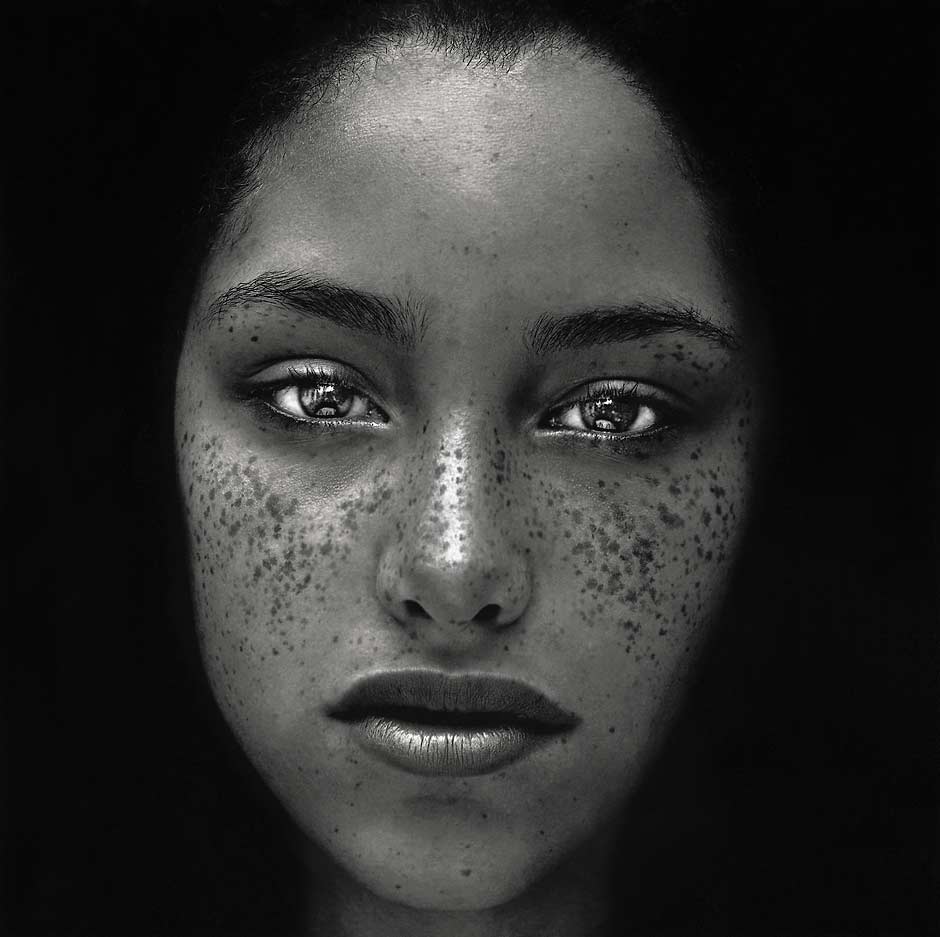
#1.
Do I like this this image?
I do like this image and the reason on why I do is purely because it stands out dramatically well with the sharp, detailed features. 

How does it make me feel? 

This image makes me feel quite sad as it seems to come across to me that the girl in the picture hasn't had the best of life's.

Does the image tell a story? 
I think that this image does tell a story and I believe that it has got a deep, dark, mysterious side to it. This is because the girl in picture gives you that expression that she's in the 'shadows', always has been and always will be. I think it comes across like that purely because of how the image is laid out. To me, it looks as if she is stepping out from the 'darkness' and into the light to tell her story. 

Was the photographer trying to get a message or particular feeling across to the viewer?

I think the photographer was trying to get a particular feeling across the viewers as this image makes you feel something, makes you think on what is the story behind it and why Penn published it the way he did.

The composition on this picture is called the 'rule of thirds'. The meaning by this a photographic composition and the 'rule' is to break the image down into thirds, both horizontally and vertically so you can have nine parts. As this image is a close up portrait, the subject then becomes the eyes which can fall nicely on the vertical lines.


Leading lines?

This image doesn't use lines to direct the eyes of the viewer, neither does it have any strong diagonals. 

How is the light used?

The image has a hard light. I know this because a 'hard' light is basically referred to the image on having very harsh shadows with a sharp edge. Hard lighting is found where the lighting is direct, diffused and is not bouncing or scattered by objects or conditions. The flash on cameras is a hard light source, giving the portrait a more of 'dramatic' quality look.

Is the image 'flat looking' or very three dimensional? 

The image is three dimensional. This is purely because hard light has a huge amount of contrast meaning shadows have harder edges and greater definition and hard light shots tend to look more 'three dimensional' than it would if the lighting was soft.

How is the space used? 

The spaced is used brilliantly on this image as it makes it even more eye-catching with it not having too much 'negative' space so I think it compliments the image and the surroundings of the black background quite well.

Is the composition being followed or broken? 

The composition of this image is being broken. I know this because the image is directly in the middle, drawing the focus of the eye to centre and this is one of the most common ways to break the rule of thirds.


#2.
Do I like this this image?
I do like this image and the reason on why I do is because this image is in the 'fashion' category of Penn's work. 

How does it make me feel? 

This image makes me feel ostentatious as it comes across that the image is there to 'impress' with it's 'old' fashioned and 'theatrical' feel.

Does the image tell a story?

I think that this image does tell a story and the reason on why I think this is because of how Penn takes majority of photographs of an individual person. All of Penn's 'fashion' category shows how much passion he's got for this single person, ''Lisa Fonssagrives'', his wife who stayed married until her death in 1992.

Was the photographer trying to get a message or particular feeling across to the viewer?
I think the photographer was trying to get a particular feeling across the viewers as this image makes you feel something with how passionate the images is. 

The composition is used essentially, with how the 'blacks' and 'whites' merge one into the other, making the tonal contrast significant. 


Leading lines?

This image doesn't use lines to direct the eyes of the viewer, neither does it have any strong diagonals. 

How is the light used?
The light in this image is used with a ultra-high contrast with sharp visual results making the image look dramatic.

How is the space used? 
The spaced is used correctly on this image as it's not being surrounded in pointless, 'negative' space so it compliments it well.

Is the composition being followed or broken? 
I think the composition on this image is being followed as everything seems to be well balanced and automatically draws you into the facial features first.  


Irving Penn - Mouth (for L’Oréal), New York | 1986 | dye transfer print | Copyri
#3.
Do I like this this image?
I do like this image and the reason on why I do is because of how Penn has made the lips stand out with these different colours and made rest of the face dull and grainy. 

How does it make me feel? 


Does the image tell a story?

I think that this image does tell a story and the reason on why I think this is purely because of how each different colour is on one pair of lips. This makes me think that they're advertising this way because no matter what colour shade you 'like' or 'suit', we're all the same. 

Was the photographer trying to get a message or particular feeling across to the viewer?
I think the photographer is trying to send a message across to viewers as this image is an advertisement for ''L'Oreal'' demonstrating all the lipsticks on one pair of lips to show the audience the different colour tones.

The composition is used well as everything in the picture is in a suitable place within the frame of the picture. 

Leading lines?

This image doesn't use lines to direct the eyes of the viewer, neither does it have any strong diagonals. 

How is the light used?

The lighting in this picture is used of a low contrast and a heavy grain. This shots are normally done on these kind of images as adjust and recreates an emotive style of 'high fashion' using black and white.

Is the image 'flat looking' or very three dimensional? 

This image is three dimensional.

How is the space used? 

The space is used correctly as it just focuses the viewers eyes directly onto the mouth as there is no extra 'negative' space going on which doesn't destroy that main focus. 

Is the composition being followed or broken? 

I think the composition isn't being broken on this image as everything seems well balanced with the lips being the main focus with nothing else in the background distracting the viewers the other way. 


Task 2, Studio Visit

The first day at Uclan was an induction of the studio where we was carrying out the task for the 'portraiture exhibition'. A women who worked at Uclan came and told us all about the health and safety of being in the studio. Once we got shown round the studio and knew the safety rules, we got an induction of the darkrooms and what it was all about. 
The equipment which was in the studio at Uclan was such a better, higher quality than what we have got a Preston's College. Numerous of different lighting spread across the ceiling. By them being on the ceiling it made your task a whole lot simpler as it was never in your way when carrying out the shoot. 
Another thing was also that they an equipment called a ''light meter''. This small, simple device made your time a whole lot easier! All it basically was a meter which tells the photographer which shutter speed and f-number should be selected for the correct exposure.  


Annotation

The numerous of photos that are shown below is what I photographed at Uclan, ''University of Central Lancashire''.

To do this shoot, I used a Canon 5d Mark II (24-105mm lens). 


What I like about these images is the fact that they're so simple but still look effortlessly-good. 

What I believe that could be improved is the way I've taken the photos. By this I mean I should of taken my time and not rushed with the way I angled the camera. As you can see above, there is a lot of 'negative' space around the model which isn't necessary and just makes the photos look inadequate. Also, the lighting and the focus could be improved and what I mean by this is that as you can see on all the photos, there is a slight yellow undertone on the edges of them. To improve this, I would of added an extra few lights to brighten the background. 

What I plan on doing differently next week for my next shoot would be changing my first idea completely different.  By this I mean, a change of background and doing something with a more slighter edge. 

For my second shoot, I used the same camera which was a Canon 5d Mark II (24-105mm lens). I changed the white background to grey. I changed the positions of model completely different with more edger poses. I used less lighting than I did in the first shoot as I wanted my second to have more of a 'dramatic' kind of look so I also got the model to use a dark, red lipstick to give the shoot that greater 'edge' with dramatic shadows to compliment the model well.

By doing these shoots at Uclan, it's not just made me a more of a developed, experienced photographer but it's made me look and reach further into what photography is all about. It's not all about of just taking a photo and saying it's done. It's about thinking first, capturing and reviewing on what give you this idea and what was the final outcome and did it turned out the way it was planned.